
 Call (847) 250-9311
What’s Actually in Your Air? A Breakdown of Common Indoor Allergens in Illinois Homes
Get the Comfort You Deserve
Americans spend 90% of their time at home, constantly breathing indoor air, so knowing exactly what’s in your home’s air is important. Dirty, polluted air is harder to breathe, especially for people with respiratory issues, and contributes to health concerns. Learn exactly what makes up the air in your Illinois home and how On the Mark Heating & Air provides effective ways to minimize indoor allergens.
What Are You Really Breathing Inside Your Home?
Indoor air is two to five times more polluted than outside air. For Illinois homeowners, this problem is enhanced by some specific regional factors. The state cycles through dramatic seasonal shifts, from frigid, dry winters when homes are sealed tight for months to sweltering, humid summers that invite mold growth. Agricultural pollen also tends to sweep across the plains each spring and fall. All of these factors combine to create unhealthy indoor air.
Why Indoor Air Quality Matters for Illinois Homeowners
For many Illinois homeowners, poor indoor air quality (IAQ) is a daily health burden. Exposure to indoor allergens and pollutants is directly linked to allergic reactions, asthma attacks, chronic respiratory irritations, sleep disruption, and constant fatigue.
The cold Midwest winters mean homes are usually sealed for five or six months straight, trapping pollutants inside. In modern homes, energy-efficient construction dramatically reduces natural air exchange, letting air contaminants build up over time.
There’s a universal trade-off between energy efficiency and ventilation. Tightly sealed homes save money on electric bills, but can increase allergens in your home.

The Most Common Indoor Allergens Found in Illinois Homes
Several common allergens can negatively affect the indoor air quality of your Illinois home.
Dust mites
Dust mites are microscopic arachnids that thrive in warm, humid environments. You’ll find them in mattresses, pillows, upholstered furniture, and carpeting. Scattered throughout the home, they’re a prime cause of sneezing, coughing, and dry skin. Dust mites usually make themselves known during the humid Illinois summers.
Pet dander
Pet dander isn’t just hair, but microscopic flakes of skin shed by cats, dogs, and other warm-blooded animals. These particles are extraordinarily lightweight and remain airborne for hours. Once they settle, they cling to surfaces and recirculate every time someone walks by or an HVAC system kicks on. Pet dander can affect people already suffering from asthma.
Pollen
Illinois has a gorgeous tree and flower population, but both increase pollen levels that can infiltrate homes through open windows, doors, clothing, and pets. Once inside, pollen settles into carpets, furniture, and HVAC filters. Pollen is tricky to remove without effective air filtration.
Mold spores
Like dust mites, mold thrives in damp, humid conditions. Areas such as basements, bathrooms, crawl spaces, and around HVAC equipment are especially vulnerable. When mold colonies form and spores become airborne, they can trigger allergic reactions, asthma, and, with prolonged exposure, more serious respiratory illnesses.
Bacteria and viruses
Biological contaminants like bacteria and viruses can circulate through your home’s air system. In tightly sealed winter homes, airborne pathogens have fewer opportunities to escape and more opportunities to accumulate. Common viruses like rhinovirus and influenza can quickly spread in homes with poor air quality.
Particle Size (Microns) and Why It Matters for Filtration
Allergen particles are measured in units called microns. Dust mite allergens range from 10–40 microns, while mold spores range from 1–10 microns, and pet dander and bacteria range from 0.5–5 microns. The smaller the particle, the longer it stays airborne and the deeper it can penetrate your lungs.
Where Allergens Hide in Your Home
Here are some common places where allergens hide in your home:
- HVAC systems and ductwork: Ducts accumulate dust, dander, mold spores, and debris over time. Every time your HVAC system cycles, it can recirculate that buildup throughout the entire house.
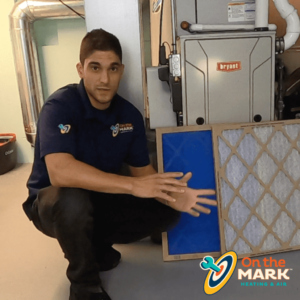
- Air filters: If not replaced, air filters can become breeding grounds for allergens. We recommended replacing your air filters every one to three months.
- Carpets and curtains: Allergens can cling and be trapped in carpets and curtains, but every time they’re moved, they float in the air again.
- Basements and crawl spaces: These areas are often cooler and damp, making them prime spots for mold growth and dust mites.
- Attics and insulation: Airborne allergens that build up in your attic can be released into other areas of your home, particularly if air sealing between the attic and conditioned spaces is inadequate and your insulation is old.
How Allergens Enter and Circulate Through HVAC Systems
Your HVAC system’s return air intake pulls room air through the filter and distributes it through the home, along with anything not captured by the filter. A properly maintained system with high-quality filtration traps allergens before they can leak into your air. A neglected system keeps allergens circulating through the home indefinitely.
Signs Your Indoor Air May Be Contaminated
Your body and your home often give you signals that your air is contaminated. Watch for these warning signs that it may be time to get your indoor air quality checked:
- Allergies or asthma symptoms that are worse indoors than outdoors, or that persist year-round rather than just during seasonal peaks
- Sneezing, runny noses, or itchy eyes that improve when you leave home and return when you come back
- Musty or stale odors that are difficult to find and identify
- Visible mold growth on walls, ceilings, around windows and vents, in the basement, and in crawl spaces
- Excessive dust accumulation on surfaces shortly after cleaning them
- Unexplained fatigue, headaches, or difficulty concentrating (brain fog) while at home
How Your HVAC System Impacts Indoor Air Quality
A well-maintained HVAC system with appropriate filtration is a powerful tool for improving your home’s indoor air quality. Dirty evaporator coils and clogged drain pans harbor mold and biological growth that spread throughout your home. HVAC maintenance tune-ups clean these parts and can include an indoor air quality assessment.
HVAC Air filter grade is also important. They are measured by MERV (Minimum Efficiency Reporting Values) ratings. Standard one-inch air filters typically carry a MERV rating of 1–4 and capture large debris, but still miss most allergens. Upgrading to a MERV 8–13 filter dramatically improves allergen capture without significantly restricting airflow in most systems.
HEPA-level filtration requires a whole-home air purifier, but delivers the highest level of particle removal available.
Seasonal Allergen Differences
Illinois’ four distinct seasons each bring different allergen profiles, so indoor air quality challenges shift throughout the year.
In the spring, tree pollen from oak, birch, maple, and elm arrives in full force, while mold can begin to thrive in the warmer environments. Summer brings more pollen from grass and weeds, and creates humid conditions that are perfect for mold and dust mite growth.
When fall arrives, all of these spring and summertime allergens are trapped inside while the house seals for the colder season. By the time winter rolls around, sealed homes with minimal ventilation trap dust mites, pet dander, and any existing mold. HVAC systems that haven’t been serviced dramatically accelerate this buildup and circulate it through the home.
Effective Ways To Reduce Indoor Allergens
Reducing indoor allergens requires combining several approaches rather than relying on a single fix. The expert team at On The Mark Heating & Air is available to help with these effective solutions:
- Keep humidity between 30 and 50% with a whole-home humidifier in the winter, which prevents overdrying that can irritate the airways.
- Install a dehumidifier for the summer to prevent mold and dust mite growth.
- Invest in energy recovery ventilators (ERV), which allow fresh outdoor air exchange without sacrificing energy efficiency.
- Install air ionizer systems to neutralize airborne bacteria, viruses, and mold spores as they pass through the air.
- Look into other air filtration systems, such as UV light purification, to eliminate contaminants.
- Connect an air scrubber to your HVAC ductwork to remove contaminants from your air using light waves.
- Schedule regular HVAC maintenance with the OTM team.
Why a Whole-Home Air Quality Assessment Matters
A whole-home air quality assessment provides the information needed to make targeted, effective improvements. On The Mark Heating & Air’s air quality testing assessments will:
- Evaluate existing filtration capacity.
- Identify moisture problem areas.
- Give you data on exactly what is in your air.
- Inspects ductwork for contamination or leakage.
- Test home humidity levels.
After our IAQ assessment, we recommend the best solution depending on your specific air quality concerns.
When To Call a Professional for Indoor Air Quality Solutions
Many of the most impactful indoor air quality solutions require professional installation and expertise, including whole-home air purifiers and UV systems, whole-home humidifiers or dehumidifiers, ERV installation, duct sealing, and HVAC system upgrades for better air distribution.
Call the professionals at On The Mark Heating & Air when you suspect a serious indoor air quality problem but can’t identify the source. If your HVAC system hasn’t been serviced in a year, this is also a reason to call in the professionals.
Take Control of the Air Inside Your Home
When you need to take control of the air that you breathe in your Schaumburg, Illinois home, it’s important to work with an IAQ professional like On The Mark Heating & Air. With our IAQ assessments, we’ll help you find the right solution to deliver clean, easy-to-breathe air to your home. Contact us today to set up a consultation.

We're Ready to Help!
Need service for your home? Book an appointment online to receive fast reliable service!
Schedule Now Schedule Now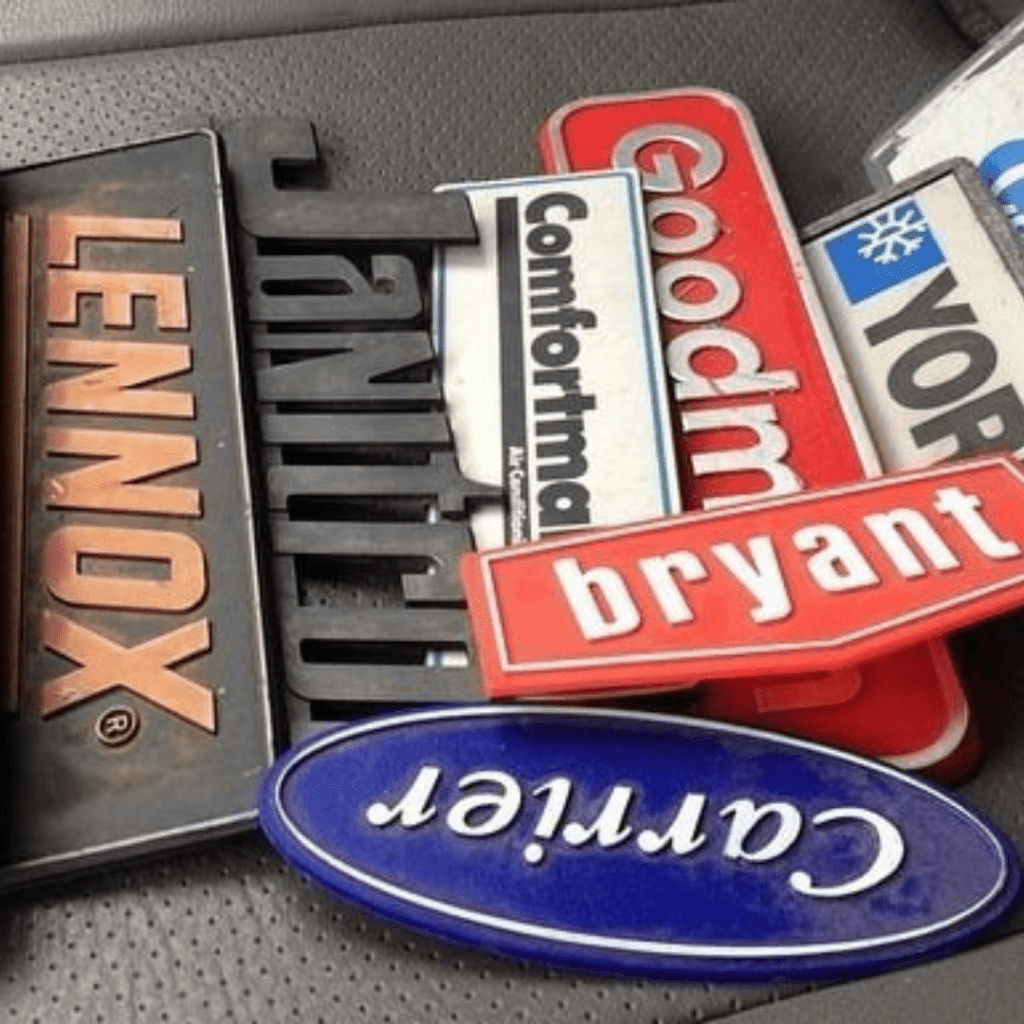
Whatever You’ve Got, We Can Fix It
It doesn’t matter if your system is brand new or has been running since the ’90s. Our techs work on every major HVAC brand: Carrier, Trane, Lennox, Rheem, Goodman, and everything in between. That’s partly because we hire experienced technicians, and partly because every one of our techs is NATE-certified.
NATE stands for North American Technician Excellence. It’s the HVAC industry’s most recognized certification, and earning it means passing rigorous exams that prove real working knowledge of heating and cooling systems. When a NATE-certified tech tells you what’s wrong with your system, you can trust that answer.
5 Star Rating | 900+ Google Reviews
Hear from your neighbors about our heating, cooling and indoor air quality services in Schaumburg, IL.