 Call (847) 250-9311
ERV vs. HRV and Why ERV Is Better for Illinois Homeowners
Get the Comfort You Deserve
Both energy recovery ventilation and heat recovery ventilation systems improve fresh air circulation in your home, but they handle moisture very differently. That difference matters. For Illinois homeowners, the choice between an ERV and HRV is clear. Our local climate makes one option significantly more practical than the other.
Understanding Fresh Air Ventilation in Illinois Homes
Modern homes are built tight. That’s great for energy efficiency, but it also means stale air, humidity, and airborne contaminants get trapped inside. In Illinois, where winters are cold and dry, and summers are hot and humid, managing indoor air is a year-round job.
What Is an ERV System?
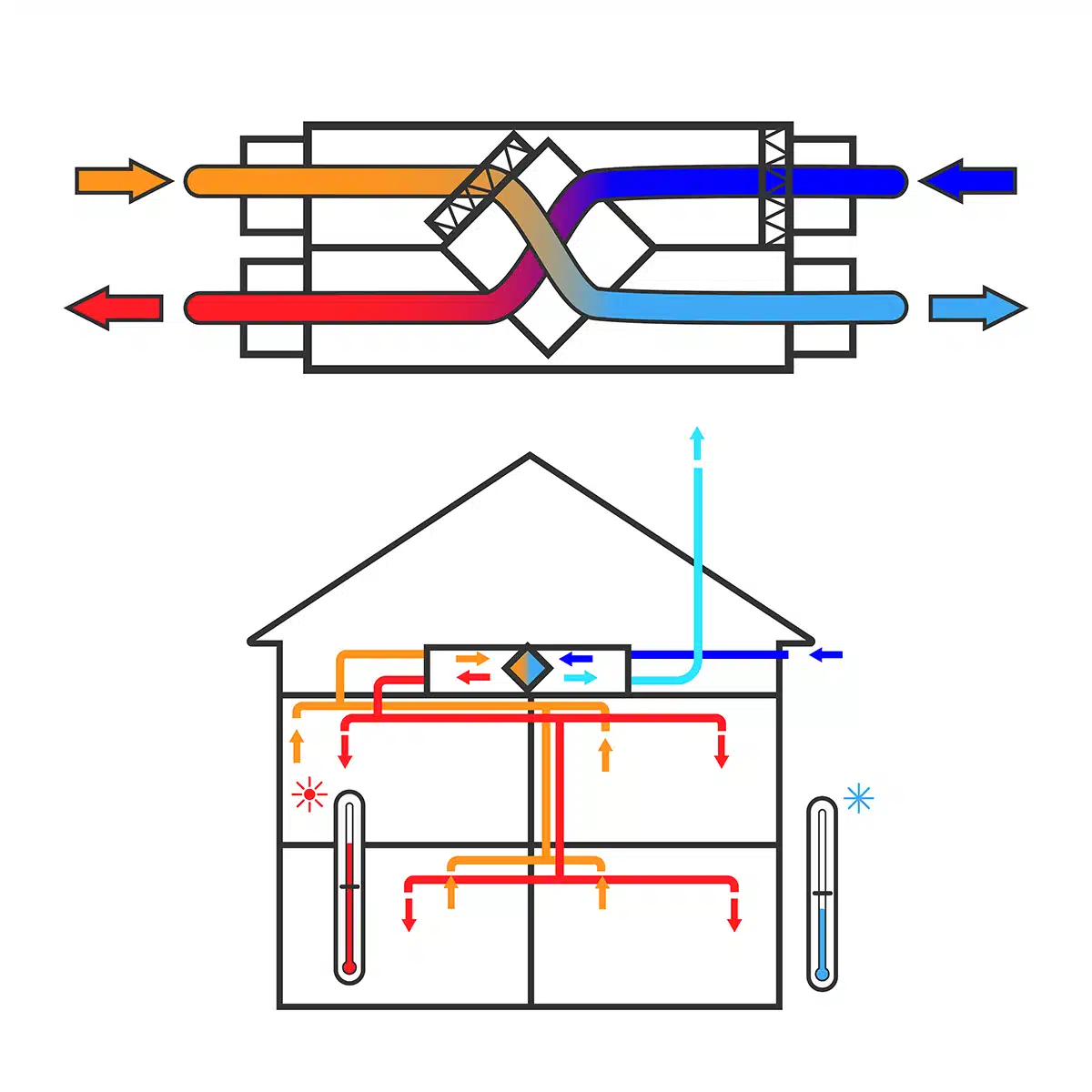
An energy recovery ventilator (ERV) exchanges stale indoor air for fresh outdoor air while transferring both heat and moisture between the two airstreams. In winter, it captures warmth and some humidity from the outgoing air and passes it to the incoming fresh air. In summer, it pushes heat and excess humidity back outside.
The result is a continuous supply of fresh air without dramatic swings in temperature or humidity. ERV systems are compatible with most existing HVAC equipment and can run continuously or cycle with your system.
What Is an HRV System?
A heat recovery ventilator (HRV) only transfers heat, not moisture. Stale indoor air and fresh outdoor air pass through a heat exchanger, and thermal energy moves from one stream to the other. The moisture exits with the stale air and is not retained.
HRV systems are commonly used in colder, heating-dominant climates where managing excess indoor humidity is a primary concern. They’re well-suited for places where outdoor humidity is consistently low and indoor moisture buildup is the main issue.
ERV vs. HRV: What’s the Difference?
The core difference between an ERV and an HRV comes down to moisture management. An ERV transfers both heat and humidity between airstreams. An HRV transfers heat only. Here’s why that distinction matters for Illinois residents.
Humidity control
Illinois winters are dry. When an HRV exhausts stale air, it also exhausts the humidity that was helping keep your home comfortable. An ERV retains a portion of that moisture, helping maintain ideal indoor humidity levels without running a separate humidifier. In summer, the ERV helps reject outdoor humidity before it enters, keeping things comfortable in both directions.
Comfort levels
A home that’s too dry in January causes static electricity, dry skin, and irritated sinuses. Excess humidity in July encourages mold growth and makes the air feel heavy. An ERV actively works to moderate both extremes. An HRV leaves humidity fluctuations largely unmanaged.
Energy efficiency
Both systems recover thermal energy during the exchange process. However, because an ERV also retains moisture that would otherwise need to be replaced by a humidifier or removed by a dehumidifier, it can reduce the overall load on your HVAC system. That adds up to real energy savings over time.
Indoor air quality
Both systems improve ventilation, which is foundational to good indoor air quality. Fresh air dilutes indoor pollutants, odors, and carbon dioxide. The difference is that an ERV does this while keeping humidity in a healthier range, which indirectly reduces conditions that allow mold and dust mites to thrive.
Why ERVs Are Better for Illinois Homes
Illinois winters are cold and dry, while summers are hot and humid. An HRV is optimized for cold climates where indoor humidity is consistently too high and needs to be removed. That’s not Illinois.
An ERV is often the preferred choice for Illinois homes due to seasonal humidity swings. It can hold onto moisture in winter and push excess humidity back outside in summer. Recommending an HRV to an Illinois homeowner is like putting winter tires on a car you drive year-round.
Common Indoor Air Problems ERVs Can Help Address
An ERV can help reduce or eliminate several common complaints, including:
- Stale or stuffy air that lingers even with windows closed.
- Condensation on windows during winter months.
- Common indoor allergens like dust mites and mold spores that thrive in poorly ventilated spaces.
- Cooking and pet odors that never fully clear out.
- Dry air that aggravates allergies or respiratory conditions in winter.
Signs Your Home May Need Better Ventilation
There are a few things worth paying attention to when deciding whether your home could benefit from a ventilation upgrade. Persistent indoor allergy symptoms, humidity that feels off, visible condensation on surfaces, and air that just feels heavy or stale are all worth a closer look. An indoor air quality check is a good starting point if you’re not sure what you’re dealing with.
How ERVs Work with Your HVAC System
An energy recovery ventilation system is designed to integrate with your existing heating and cooling equipment. In most installations, the ERV ties into your ductwork and operates alongside your furnace or air handler. Some units run continuously at a low flow rate while others cycle on with your HVAC system.
Your existing equipment doesn’t need to be replaced to add an ERV, but integration should be done correctly. Improper connections can reduce airflow, create pressure imbalances, or cause the ERV to work against your HVAC system.
Why Proper ERV Installation Matters
An energy recovery ventilator installation done wrong can underperform or cause new problems. Duct connections, airflow balancing, and controls all need to be configured for your specific home layout and system. This is not a DIY project, and it’s not something to hand off to a technician who hasn’t done it before.
Why a Whole-Home Evaluation Is Important Before Installing an ERV
Every Illinois home has a different layout, ductwork, insulation levels, and HVAC equipment. Before recommending or sizing an ERV, a proper assessment of your home’s ventilation needs, air sealing, and existing system performance is important. Skipping that step often leads to an undersized or oversized unit that doesn’t perform the way it should.
Our assessments are thorough because that’s the only way to get the installation right the first time. Strategies to reduce indoor allergens and improve comfort depend on having accurate information about what’s actually happening in your home.
ERV Benefits Beyond Air Quality
Improved air quality is the main reason homeowners look into home ventilation systems, but the benefits of ERV systems don’t stop there. Properly controlled humidity protects wood floors, furniture, and cabinetry from seasonal damage. Reduced strain on your HVAC equipment can extend their usable life. And a home with stable, comfortable air is simply more pleasant to live in.
Like any mechanical system, ERVs require periodic maintenance to keep airflow and efficiency where they should be.
Why Schaumburg Homeowners Choose On The Mark Heating & Air for IAQ Solutions
On The Mark Heating & Air is a family-owned and operated HVAC company serving Schaumburg and the surrounding communities. All of our technicians are NATE-certified, meaning they’ve passed rigorous exams that verify real working knowledge of heating, cooling, and ventilation systems.
When you call us about an ERV, you’re going to get an honest assessment of your home, a clear explanation of your options, and a recommendation that actually fits your situation.
Is an ERV Right for Your Illinois Home?
For most Illinois homeowners, an ERV is the better choice over an HRV for a home ventilation system. It manages both heat and moisture, it works with your existing HVAC system, and it addresses the full range of climate challenges you’ll face throughout the year.
Contact On The Mark Heating & Air today. We’ll take a close look at your home and give you a straight answer.

We're Ready to Help!
Need service for your home? Book an appointment online to receive fast reliable service!
Schedule Now Schedule Now
Whatever You’ve Got, We Can Fix It
It doesn’t matter if your system is brand new or has been running since the ’90s. Our techs work on every major HVAC brand: Carrier, Trane, Lennox, Rheem, Goodman, and everything in between. That’s partly because we hire experienced technicians, and partly because every one of our techs is NATE-certified.
NATE stands for North American Technician Excellence. It’s the HVAC industry’s most recognized certification, and earning it means passing rigorous exams that prove real working knowledge of heating and cooling systems. When a NATE-certified tech tells you what’s wrong with your system, you can trust that answer.
5 Star Rating | 900+ Google Reviews
Hear from your neighbors about our heating, cooling and indoor air quality services in Schaumburg, IL.